For most football coaches, preparation time is the biggest hidden cost of the job. A grassroots coach running two sessions a week might spend several hours planning, finding exercises, and organising content — on top of work, family, and everything else life demands.
The good news is that most of that time can be eliminated. This article covers the most effective strategies for cutting training preparation time without sacrificing quality.
The two biggest time wasters in session planning
For most coaches, two activities consume the majority of planning time. The first is searching for exercises — flicking through books, YouTube videos, and coaching websites to find a drill that fits your squad size, age group, and session theme. The second is building structure from scratch — deciding the session flow, calculating timing, ensuring the exercises connect logically.
Strategy 1 — Use a season plan as your foundation
The single biggest time-saver available to any coach is a structured season plan. When you know what each week's theme is in advance, you're not making that decision fresh each time — you're executing a plan.
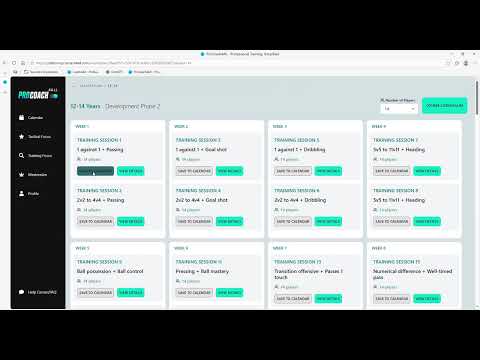
ProCoach4All's MasterPlan imports a complete, periodised season with a single click. Every week's sessions are already planned, structured, and age-appropriate. Rather than starting from a blank page, you start from a professional foundation.
Strategy 2 — Duplicate sessions that work
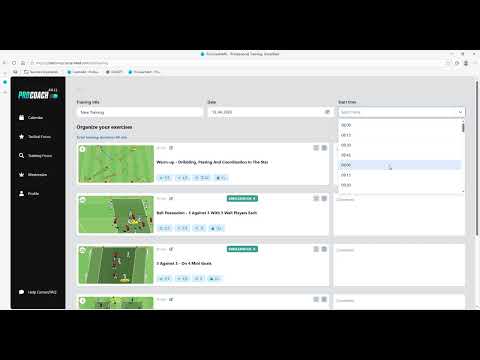
One of the most underused time-savers in coaching is simply repeating what works. ProCoach4All's duplicate feature copies any saved session to a new date with a single click.
Strategy 3 — Filter, don't browse
ProCoach4All's filter system lets you specify your player count, age group, and tactical focus before you see a single exercise — surfacing the most relevant options immediately.
Strategy 4 — Plan in batches
Planning one session at a time is inefficient. Setting aside time to plan the next two or three weeks at once dramatically reduces the cognitive overhead. With ProCoach4All's calendar view, you can see multiple weeks at a glance and plan ahead systematically.
The result: more time for what matters
Time saved in planning is time available for the parts of coaching that actually require a human — watching your players, building relationships, and giving individual feedback.